Indoor cats are naturally less active, so weight tends to creep up, especially when food is freely available. The goal isn’t a drastic diet, it’s a slower, more active feeding routine that keeps the cat satisfied.
Start with measured meals
Free feeding is the most common cause of weight gain, because the amount is hard to track. Switch to measured meals based on your vet’s recommended daily amount, and split it across the day so the cat isn’t facing an empty bowl for long.
Use a slow feeder
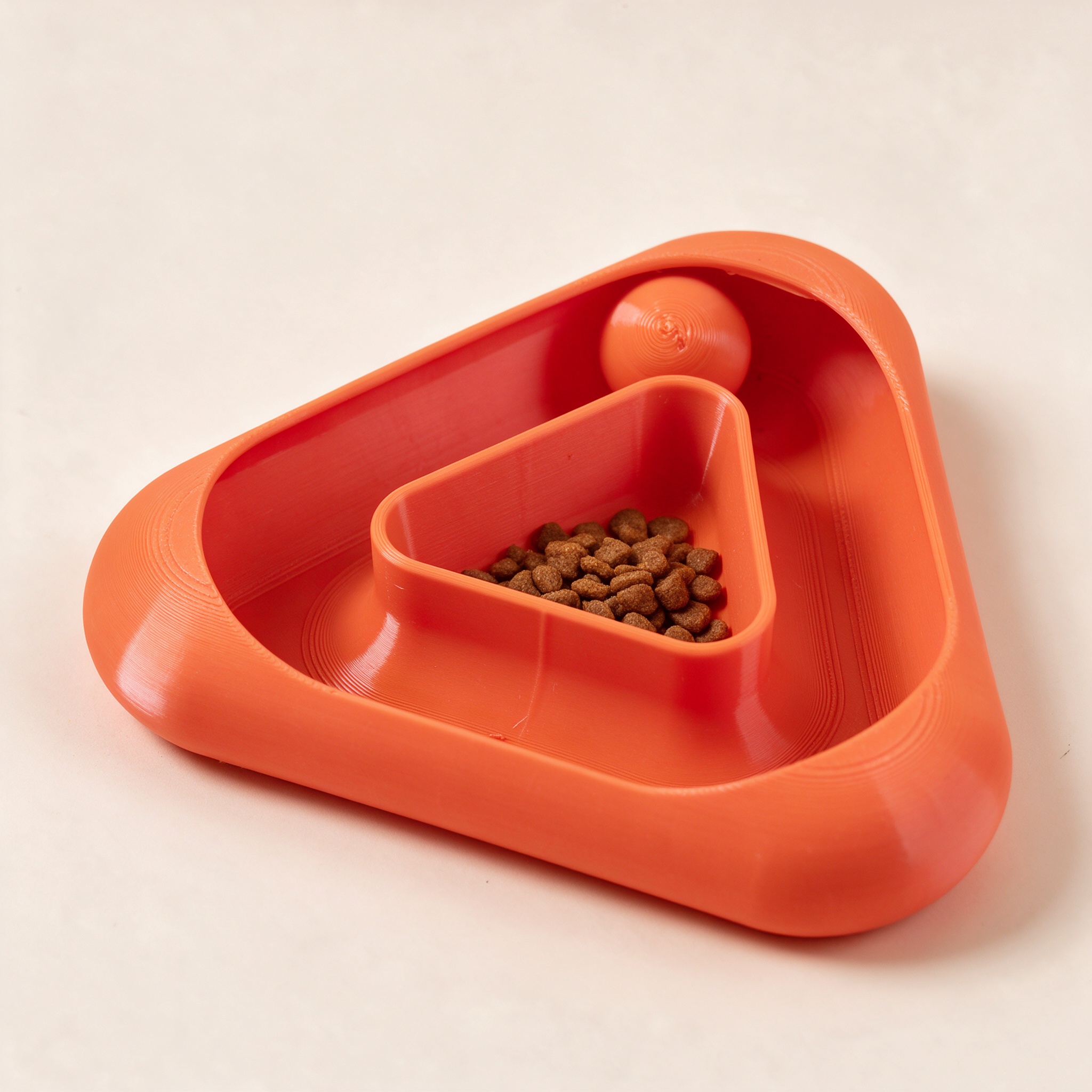
A slow feeder hides kibble in channels, so the cat has to nudge and paw pieces out. This stretches the meal, which helps a cat feel fuller on the same correct portion and removes the quick gulping that leaves them begging minutes later.
Add a little activity
The ball track on the rim gives a short play session around the meal, mimicking a hunt-and-eat rhythm. A few minutes of activity before food is a natural way to engage an indoor cat.
Simple weight-management habits
- Measure every portion rather than topping up
- Stretch meals with a slow feeder
- Limit treats and count them into the daily total
- Encourage a few short play sessions each day
- Track weight monthly and adjust with your vet
Made to order in our workshop
Each bowl is 3D-printed from durable, wipe-clean PETG with rounded edges and hand-finished. Ask about colors via our contact page, and see the shop.