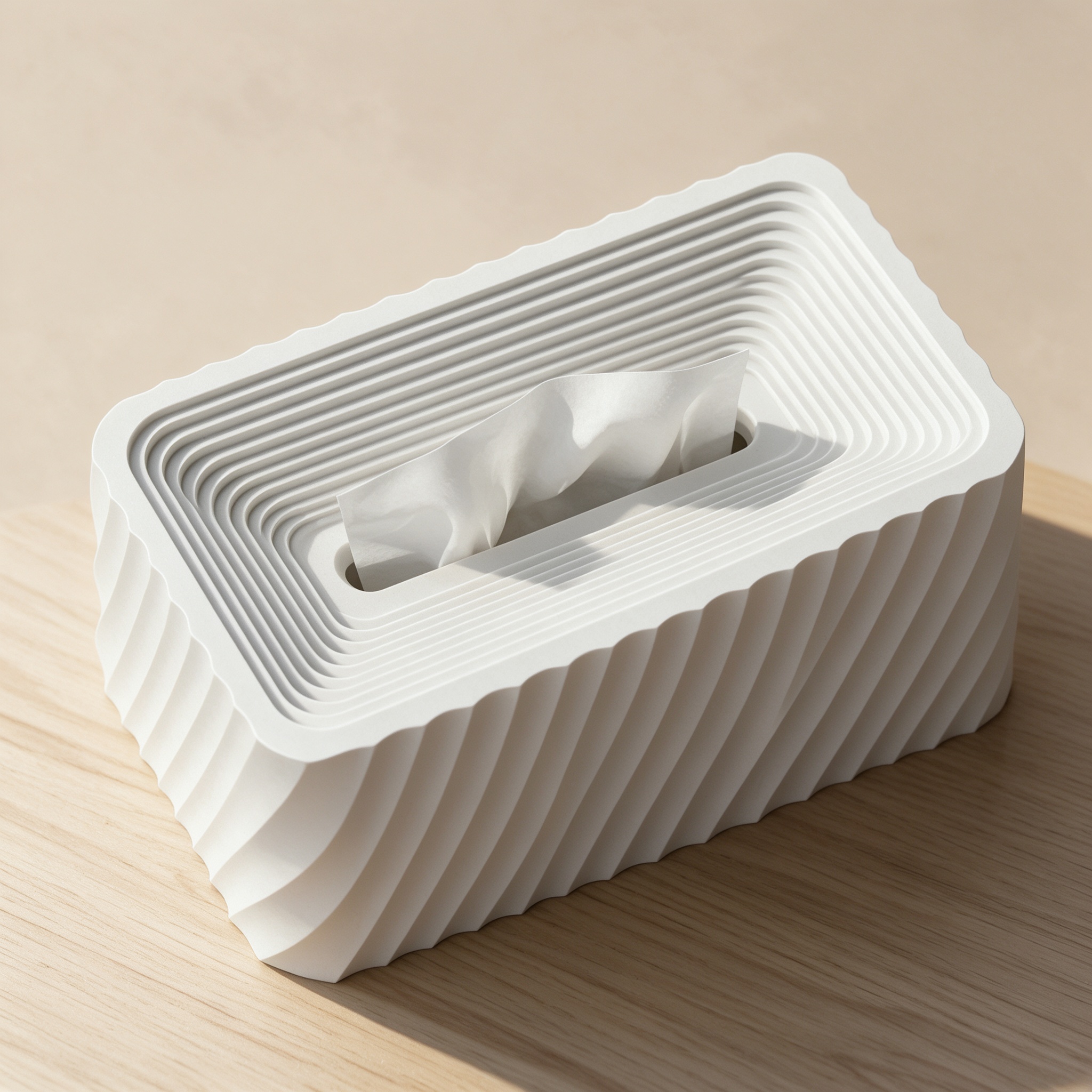
If you’ve ever wondered what a 3D-printed product is actually made of, the short answer for most home goods is PETG. It’s a plastic chosen not for novelty but for the boring, important reasons: it’s strong, it’s safe around food and pets, and it holds up to daily use.
What PETG actually is
PETG is a thermoplastic related to the PET used in water bottles, modified with glycol to make it tougher and easier to shape. That family connection is why it feels familiar: the same plastic that safely holds your drink can be formed into a tissue box cover that survives years of use.
Why it’s a good fit for home decor
- Durability: it resists cracking and warping far better than cheaper plastics, so it handles being knocked, stacked, and wiped down
- Safety: it’s food-safe-friendly and non-toxic, which matters for bowls, dishes, and pieces around pets and kids
- Moisture resistance: it shrugs off bathroom humidity and kitchen spills without degrading
- Heat tolerance: it stands up to warm rooms and lamp heat better than many other filaments
How it compares to other plastics
PLA, the other common 3D-printing plastic, is cheaper but more brittle and heat-sensitive, which is why you’ll see it in disposable or decorative prototypes rather than daily-use goods. ABS is tougher but needs careful handling and has an unpleasant smell while printing. PETG sits in the sweet spot: tough, safe, and practical, which is why we use it for everything in the shop.
What it feels like in a finished piece
A well-finished PETG piece has a smooth, slightly matte surface with subtle layer lines up close. It feels solid and slightly flexible rather than brittle, and it doesn’t chip when dropped on a hard floor.
Made to order in our workshop
Every piece is printed from durable PETG, hand-finished, and checked before shipping. Ask about colors via our contact page, and browse the full shop.